NineCasino Reputation and Player Review Signals
 Available in GB
Content
Public review platforms are useful for spotting sentiment and recurring topics, but they are not proof that NineCasino always pays quickly, never pays, is safe, or is a scam. The Trustpilot profile checked on 29 August 2026 showed a 4.5 TrustScore with more than 5,700 reviews and a mix of positive and negative experiences. Trustpilot itself says reviews express users’ opinions and that individual claims are not automatically verified as factual accounts.
The factual baseline should come first. NineCasino is operated by Uno Digital Media B.V.; licensing status is handled separately in the dedicated trust guide; and the latest located Curaçao Gaming Authority registry lists the operator’s OGL/2024/1267/0760 reference as “Assessment in progress”. Review sentiment can then be used as a secondary signal, especially when a recurring complaint or praise theme can be compared with NineCasino’s own withdrawal, KYC or support terms.
Current review-platform data
The Trustpilot English profile displayed a 4.5 out of 5 TrustScore and 5,738 reviews on 29 August 2026. The profile was claimed by the business, and Trustpilot reported that NineCasino replied to 98% of negative reviews, typically within two weeks. Those are platform observations at a point in time, not a permanent performance rating.
Scores and review counts can move quickly. A high average can coexist with serious individual complaints, while a low-star review can reflect a genuine bad experience, a misunderstanding, an unresolved verification request or a dispute that cannot be independently reconstructed from the public post. That is why this page does not treat the aggregate score as a safety certificate.
Trustpilot also explains that reviews are the opinions of individual users, not Trustpilot’s own conclusions. Some reviews can carry a verified status when an interaction is confirmed, but that does not turn every factual allegation inside the review into an independently audited finding.
What review platforms can tell you
Review platforms are strongest as pattern detectors. If many recent users independently mention the same part of the experience, that can tell you where to look more closely before depositing. Useful dimensions include the recency of reviews, whether the theme appears across different star ratings, whether the company replies, and whether the same issue can be checked against published terms.
For NineCasino, public reviews include both positive comments about games, bonuses, service and withdrawals and negative comments involving account restrictions, verification or cashout problems. The responsible way to use those posts is not to repeat an individual accusation as fact. It is to identify the process category and then compare it with what the operator actually says it can do.
That method turns an anecdote into a research lead. A complaint about verification points to the KYC policy. A payout complaint points to withdrawal processing rules. A support complaint points to the published support channels. The public post remains an experience report, while the policy page establishes the operator’s documented process.
Withdrawal complaints: compare the story with the published process
Withdrawal-related reviews deserve attention because access to funds is a high-impact issue. But a post saying a payout was “blocked” or “cancelled” does not by itself reveal whether the cause was payment-method data, KYC, an account review, bonus conditions or another issue.
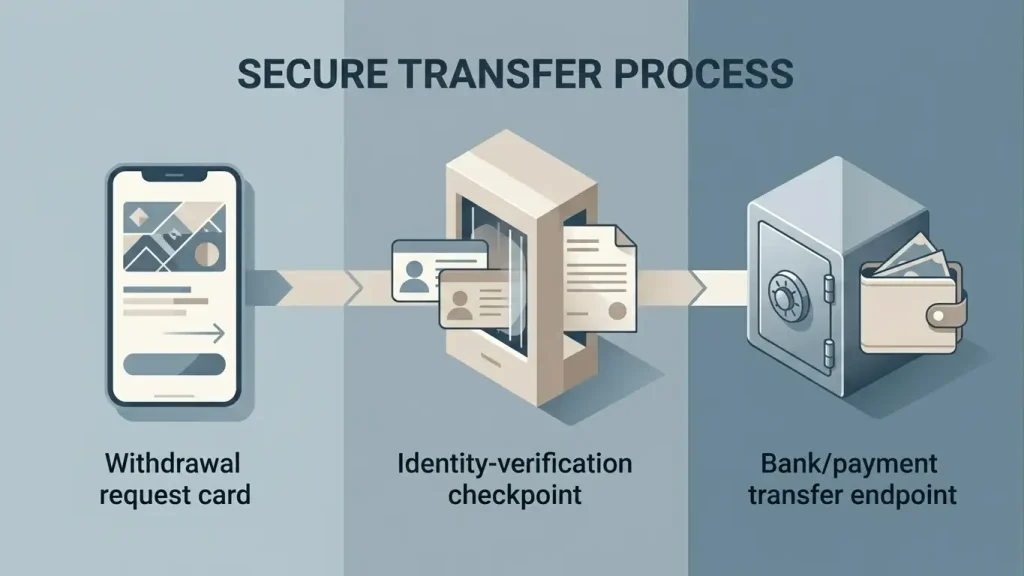
NineCasino’s official terms state that the casino-side withdrawal-processing period can take up to 72 hours before the payment provider’s own transfer time is added. The current terms also say the minimum withdrawal depends on residence and that the available maximum depends on the method and loyalty rank shown in the cashier. Those verified rules provide a baseline for judging whether a review is describing normal processing, a verification hold or something materially different.
The dedicated payout guide explains these withdrawal facts in detail. A useful reputation check asks whether a recurring public complaint lines up with a documented friction point, not whether the wording of one review sounds persuasive.
KYC complaints: distinguish evidence requests from misconduct claims
KYC is another recurring source of frustration in online gambling reviews generally because players can be asked for identity, address or payment evidence before a withdrawal completes. NineCasino’s own policy lists a current passport or ID card, proof of permanent address such as a utility bill or bank statement no older than six months, and possible additional evidence depending on the case.
The policy says the KYC Team has 24 hours to review uploaded documents and send an initial outcome, but that is not a guarantee that the full verification process ends in 24 hours. One possible outcome is a request for more information. The policy also says withdrawal rights can be limited while verification is unresolved.
Those details do not prove that every complaint about KYC is justified or unjustified. They establish that verification is a real part of the published process and can affect withdrawals. The KYC guide is the better source for document and timing rules than an isolated reviewer description.
Support sentiment: response presence is not resolution quality
NineCasino advertises 24/7 support by email and live chat. Trustpilot’s current profile also shows frequent public company replies, including a high reported response rate to negative reviews. Together, those facts indicate that support channels and public response activity exist.
They do not establish how well every case is resolved. A fast public reply can be helpful, generic or simply redirect a user to private support. Conversely, a reviewer who says support was unhelpful may have had a genuine poor experience without that experience proving a site-wide pattern.
When evaluating reputation, distinguish availability from effectiveness. “Support is available 24/7” is a checkable service claim. “Support solves disputes well” would require broader outcome evidence than a support-hours statement or a set of anecdotes.
How much weight should a Trustpilot score get?
| Signal | Useful for | Not sufficient for |
|---|---|---|
| Aggregate TrustScore | Quick sentiment indicator | Proving safety, legality or payout reliability |
| Recent review volume | Showing whether the profile is active | Proving claims inside individual reviews |
| Repeated complaint themes | Identifying processes to investigate | Assigning fault without documents or case records |
| Company replies | Showing engagement with public complaints | Proving the issue was resolved fairly |
| Regulator and operator records | Establishing licence and company facts | Predicting every player’s experience |
| Official KYC and withdrawal terms | Establishing published process rules | Verifying what happened in a private individual case |
A sensible weighting starts with formal facts, then process documents, then review sentiment. That order prevents both score-chasing and complaint-chasing. A good rating cannot manufacture a missing local licence, and an angry post cannot erase a verified operator record.
Licence facts should anchor the reputation discussion
Reputation and licensing overlap in search intent because users often ask “is NineCasino safe?” while looking at both review scores and regulator information. They should still be answered with different evidence. The licence and UK context page explains the Curaçao registry reference, regulator context and current licence-status evidence.
That regulatory baseline is more authoritative for licensing than Trustpilot. Trustpilot does not verify whether a casino holds a UKGC licence, and its score should never be used as a substitute for the UKGC register. Likewise, a regulator record does not prove that customer support will be fast or that every player will have a smooth withdrawal.
The practical question is not “which single source tells me whether to trust the site?” It is “what does each source type actually establish?” Regulator records establish licensing facts. Terms establish published procedures. Review platforms show reported experiences and sentiment. Each evidence layer has a different job.
Five ways to read casino reviews more critically
- Check the date. A complaint from years ago may describe terms, ownership or processes that have since changed.
- Look for repeated themes, not dramatic wording. Multiple independent mentions of verification or withdrawal friction justify checking those processes directly.
- Separate fact from interpretation. “I was asked for another document” is an observable event; “therefore the casino never pays” is a broader conclusion.
- Read company replies as one side of the record. A response can clarify a policy, but it is not independent adjudication.
- Cross-check high-impact claims. Licence, KYC and withdrawal rules should be checked against regulator records or official policy pages.
Reputation questions answered
Does NineCasino have positive reviews?
Yes. The current Trustpilot profile contains many positive reviews and displayed a 4.5 TrustScore when checked. It also contains negative reviews. The score is a sentiment indicator, not proof of safety or payout performance.
Do complaints prove NineCasino does not pay?
No. Individual reviews can flag issues worth investigating, but they cannot prove site-wide non-payment. Compare withdrawal complaints with current cashout terms and, where possible, case-specific evidence.
Does Trustpilot verify NineCasino’s licence?
No. Licensing should be checked through regulator records. Use regulator records and the dedicated licence guide for the current licensing position.
What should I do with repeated KYC complaints?
Use them as a reason to understand the verification process before depositing. NineCasino’s own KYC policy confirms that document review can affect withdrawals and that more information can be requested after the initial review.
Bottom line
NineCasino’s public review profile currently shows strong aggregate sentiment alongside a meaningful minority of negative experiences. That is useful context, but it should sit behind verified operator, licence and process facts. The most informative review themes are the ones you can route back to something checkable, such as KYC requirements, withdrawal processing or support availability.
Use public reviews to identify questions, not to outsource the conclusion. A score does not prove safety, an individual complaint does not prove misconduct, and a company reply does not prove resolution. The best reputation assessment combines recent sentiment with the formal evidence on the licence page, withdrawal guide and KYC guide.
This material was created by the NineCasino UK Guide team.
NineCasino Reputation and Player Review Signals — More on this topic at nine casino.
Related posts
NineCasino Withdrawals and Payout Times
NineCasino Live Casino