
Online Casino European Roulette in the UK: Rules
 Available in GB
Content
A practical guide to the single-zero wheel, roulette bets and payouts, online formats, and how European roulette differs from American roulette.
European Roulette’s Single-Zero Wheel
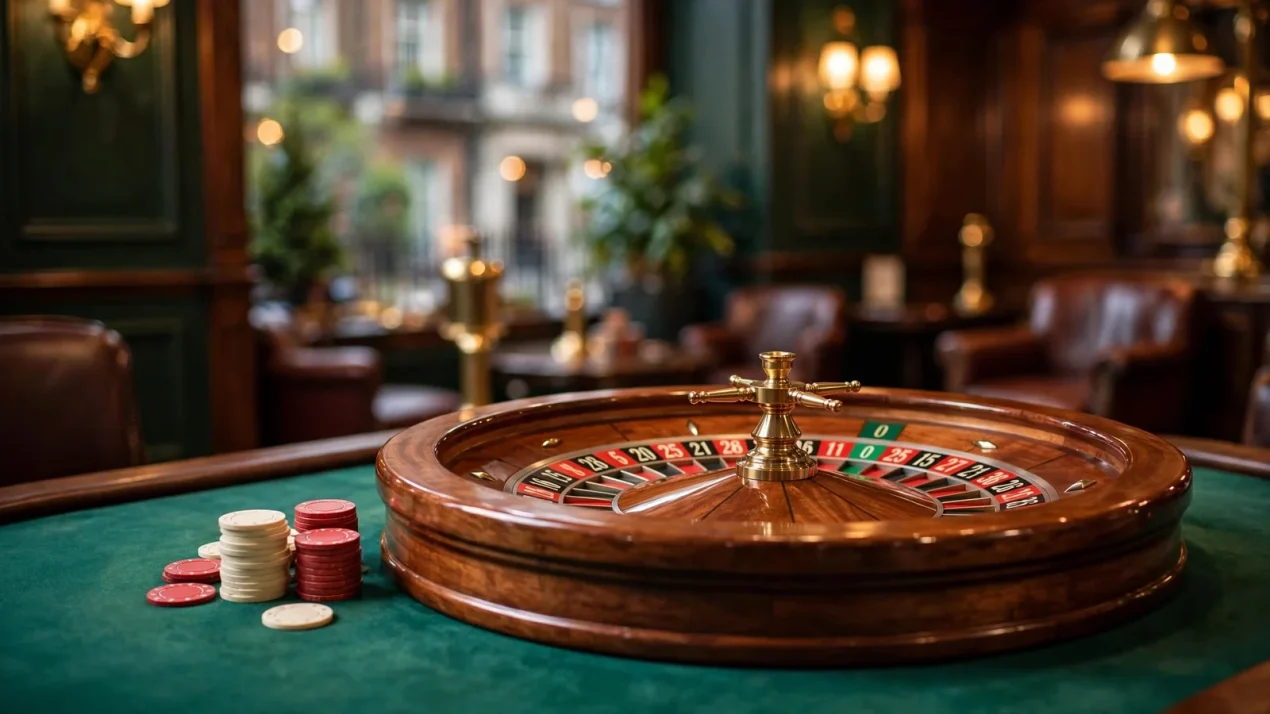
European roulette is built around a wheel with 37 pockets: the numbers 1 to 36 and one zero. Each spin ends when the ball settles in one pocket. The single zero is the feature that distinguishes this wheel’s basic probability structure from versions with an additional green pocket. On an online casino, the same structure underlies European roulette whether the result is generated by software or shown through a streamed physical wheel.
The wheel’s pockets are not merely visual markers. They define the set of possible results for each spin. In a fair model, each pocket has the same chance of receiving the ball, and one spin does not determine the result of the next. A run of recent results therefore does not provide evidence that a particular number or colour is due. The zero is one possible outcome among the 37, rather than an interruption that can be disregarded when considering the game’s mathematics.
The house edge for European roulette is 2.70%. This figure describes the casino’s theoretical advantage across the game’s possible outcomes, not a fee charged on each individual spin or a prediction of what will happen in a short session. A player can win or lose over a particular sequence; the edge is a long-run mathematical property of the game. It arises from the relationship between the wheel’s possible outcomes and the returns attached to bets. The zero is central to that relationship: it is an outcome on the wheel, while many bets do not treat it as an ordinary numbered result.
When choosing a UK casino for European roulette in 2026, it helps to check practical details alongside the game itself. This list gives a concise reference point on the payout information available for each operator.
1. Zombillion
Payout speed: 1-3 business days
Zombillion lists a payout speed of 1–3 business days, giving readers a stated timeframe to consider when reviewing it for European roulette.
2. SlotoSport
Payout speed: 1-3 business days
SlotoSport lists a payout speed of 1–3 business days. This is the available practical detail to consider alongside its European roulette offering.
3. Jetsetspins
Payout speed: 1-3 business days
Jetsetspins lists a payout speed of 1–3 business days, a useful stated detail for readers assessing an online roulette option.
4. NightWin
Payout speed: 1-3 business days
NightWin lists a payout speed of 1–3 business days. That timeframe is the available factual point to weigh when considering it for European roulette.
5. EvoSpin
Payout speed: 1-3 business days
EvoSpin lists a payout speed of 1–3 business days, offering a clear payout detail for readers exploring European roulette.
6. WinBeast
Payout speed: 1-3 business days
WinBeast lists a payout speed of 1–3 business days. Readers can use this stated timeframe as one practical consideration when evaluating it.
7. Chanze
Payout speed: 1-3 business days
Chanze lists a payout speed of 1–3 business days, providing a specific payout detail to consider alongside its roulette options.
8. Britsino
Payout speed: 1-3 business days
Britsino lists a payout speed of 1–3 business days. This is the available factual detail relevant to readers considering it for online roulette.
9. Dieselwin
Payout speed: 1-3 business days
Dieselwin lists a payout speed of 1–3 business days, giving readers a stated timeframe to factor into their choice.
10. SpinFormula
Payout speed: 1-3 business days
SpinFormula lists a payout speed of 1–3 business days. This stated timeframe is the available practical detail for readers considering it for European roulette.
That distinction helps explain why a single-zero wheel can still give the house an advantage even when the numbered pockets appear evenly balanced. The game does not offer a separate outcome to offset the zero’s effect. Its presence is incorporated into the calculation of expected returns. The 2.70% edge is consequently a useful baseline when considering European roulette, but it does not indicate the chance of winning a particular bet or the likely result of an individual spin.
For an online European roulette casino, the wheel’s stated variant is therefore more meaningful than its visual design alone. A themed interface can change the presentation without changing the underlying structure, while a different roulette variant can alter the number of pockets and the mathematical edge. The relevant questions are whether the game is identified as European roulette and whether its rules describe a single-zero wheel. The label gives the basic format; the game information should make the rules available for inspection.
In the UK, the legal context is also part of assessing online casino play. The UK Gambling Commission is the regulator responsible for online casino gambling in Great Britain. Remote operators offering gambling to British customers must hold the relevant UKGC licence, including when the operator is based elsewhere. A site that lacks a valid UKGC licence cannot legally offer real-money roulette to British residents. This requirement concerns the operator’s authority to provide gambling, not the probability of a roulette result.
NineCasino Games and Providers
UKGC-licensed operators must verify a customer’s age before allowing deposits into a gambling account. They must also provide account-level tools for setting financial limits, and prompt new customers to set a financial limit before their first deposit. These requirements sit alongside the game’s mathematical rules: they do not alter the wheel or reduce its house edge. Their purpose is to govern how gambling is offered and managed in the regulated market.
The distinction between a game’s mechanics and its regulatory setting matters because neither should be treated as a substitute for the other. A single-zero wheel identifies a particular probability structure; a UKGC licence identifies an operator subject to British regulatory requirements. One does not establish the other. For a real-money European roulette casino in the UK, both the game information and the operator’s licensing status are relevant, but they answer different questions.
The wheel itself offers no memory, intention or signal about what follows. Its 37 pockets provide the possible outcomes, and the stated house edge expresses the long-term advantage built into the game’s returns. Those facts establish the baseline for European roulette online in the UK in 2026, without implying that any individual result can be forecast.
Assessing European Roulette Casinos Without a Ranked List
A casino’s roulette offer is better assessed through verifiable details than through a single label such as “best”. The relevant evidence concerns the game itself, the information available before play, and the operator’s regulatory status. A large catalogue or polished presentation does not, by itself, establish that a particular European roulette game is transparent or suitable for comparison.
European roulette has a house edge of 2.70%, which describes the theoretical advantage to the house over time rather than a prediction for any individual spin.
The mathematical baseline is clear: European roulette has a house edge of 2.70%. That figure describes the game’s theoretical advantage to the house over time; it does not predict the result of an individual spin or establish the quality of the casino hosting it. Comparing offers therefore requires attention to the specific game’s published information, rather than assuming that every table with the same variant name presents identical details.
Check whether RTP information is accessible
Return to player (RTP) information should be available in a form that can be checked before a game is played. For roulette, the figure can help describe the game’s theoretical return over many rounds, but it is not a promise about an individual session. A useful comparison records whether the information is easy to locate, clearly attributed to the relevant game, and consistent with the rules displayed for that game.
An RTP figure without context has limited value. It should be possible to identify which roulette title it applies to, rather than relying on a general figure attached to a casino’s entire game library. The published rules and help information should also make clear what is being offered. If the stated RTP is difficult to find, applies ambiguously, or cannot be reconciled with the game information, the uncertainty is itself relevant evidence.
RTP should not be treated as a ranking shortcut. Two offers may publish comparable figures while differing in presentation, availability, or the clarity of their terms. Nor does a higher displayed return prove that a casino is more reliable. The figure describes a game’s theoretical mathematics, not the operator’s licensing or the quality of its disclosures.
Live Casino Lightning Roulette in the UK
Establish who operates the site
For real-money gambling offered to customers in Great Britain, the operator must hold the relevant UK Gambling Commission (UKGC) licence. A site’s own statement is a starting point, not independent confirmation: the licence details can be checked against the UKGC public register. The operator’s legal identity and the registered entity should be consistent across the site’s terms and its regulatory information.
Regulatory status is a threshold consideration, not a measure of roulette quality. UKGC-licensed operators must provide an internal complaints process and access to an approved Alternative Dispute Resolution service. Account controls and responsible gambling tools also matter when assessing how the service is presented. These features do not alter the roulette odds, but they provide evidence about the framework in which real-money play takes place.
Age verification is another relevant part of the operating process. Operators must verify a customer’s age before allowing funds to be deposited into a gambling account. A registration flow that invites deposits before this check would not align with the stated UK requirements.
Compare evidence, not promotional language
A practical assessment can distinguish between what is documented and what is merely asserted. Published game information, accessible RTP details, a verifiable UKGC licence, and clear account and complaints procedures are checkable points. Claims such as “premium”, “top” or “best” do not carry the same evidential weight unless they are tied to criteria that can be examined.
Do
- Check for a verifiable UKGC licence
- Locate accessible RTP information
- Review clear account and complaints procedures
Don’t
- Rely on promotional labels like “best”
- Assume every table with the same variant name is identical
- Trust assertions not tied to examinable criteria
The phrase “best European roulette casino” has no fixed technical meaning. It could refer to the clarity of game information, the range of available tables, or the operator’s broader service, which are different measures. A useful comparison states which measure is being considered and avoids treating one feature as a proxy for all the others. It also separates European roulette tables from products that borrow roulette imagery but use different game mechanics; a title’s label alone is not enough to establish that it follows roulette rules.
The resulting assessment need not produce a universal winner. It can show which operators make the relevant evidence accessible and where information remains unclear. That is a more defensible basis for comparing UK roulette services than an unsupported ranking, while keeping the game’s mathematical properties distinct from the conduct and disclosures of the casino offering it.
How Roulette Bets Work and What They Pay
A roulette bet records either a specific pocket or a group of possible results. The table layout separates these choices into inside bets, placed on numbered spaces within the grid, and outside bets, placed in areas around it. Each selection has a stated payout, but a larger payout corresponds to a narrower winning condition; it does not make the result more predictable.
Inside bets
A straight-up bet covers one number. If that number wins, the payout is 35:1. A split covers two adjacent numbers and pays 17:1, while a street covers a horizontal row of three and pays 11:1. These bets differ in how many pockets they include, so the chance of a hit and the payout are assessed together rather than in isolation.
French Roulette Online Casinos in the UK
To place one, the stake is positioned on the relevant number or on the line separating the numbers. A straight-up selection is the most concentrated option; a split or street spreads the stake across a small group. The table’s marked boundaries indicate which numbers a chip covers. This matters when bets are placed quickly or when several selections are on the layout at once: the position of each chip determines the bet.
The payout ratio describes winnings relative to the stake. It should not be confused with a prediction that the chosen number or group is likely to appear. A high quoted payout is attached to a specific winning condition, not to a method for identifying the next result.
Outside bets
Outside bets cover broader categories. Red or black, even or odd, and high or low each pay 1:1 when successful. They are straightforward to read on the layout because the relevant options are labelled beyond the numbered grid. The stake is placed on the chosen category, and the result is settled according to whether the winning pocket meets that condition.
These bets can produce a different pattern of wins and losses from a single-number selection, but the payout alone does not establish which choice is preferable. A sequence of successful outcomes does not make the next spin more likely to match the same category, and a run of losses does not make a particular result due.
Systems and chance
Betting systems organise stake decisions; they do not alter the roulette outcome. The Martingale, for instance, calls for doubling the stake after each loss, with the intention of recovering earlier losses after a later win. That progression can become difficult to sustain during a losing streak, which can damage a player’s bankroll. A system’s arithmetic does not remove the possibility of successive losses.
No roulette strategy can predict the final outcome, as results are determined by chance and past spins do not influence future results.
No roulette strategy can predict the final outcome. The result is determined by chance, so past spins cannot reliably identify what will happen next. This distinction is important when evaluating a betting plan: it may describe how stakes are changed, but it cannot convert a chance-based result into a dependable forecast.
For those learning how to play European roulette, the practical starting point is to identify the selected area, understand its payout, and distinguish that information from claims about prediction. The same principles apply when choosing to play European roulette online: a table’s interface can make selections easier to place, but it does not change what the bet covers or make its result knowable in advance.
Finding Roulette Tables Across Online Formats
European roulette can be accessed through software-generated games or live streams of a physical wheel. Both formats reproduce the familiar numbered betting interface, but they differ in how each spin is produced, how quickly rounds follow one another and the minimum stake shown on a table. The distinction is about the way the game is delivered, not a change to the underlying roulette format.
In RNG roulette, a random number generator determines the result of each simulated spin. The software can move from one round to the next without waiting for a dealer to release a ball or for a physical wheel to settle, so play is generally faster. These games also tend to have lower entry stakes: some UK tables allow bets from 10p. Auto-roulette is another software-led option; it may show a physical wheel on screen, but the result is generated electronically rather than produced by a live dealer.
Online Casinos With No Limits: UK Slot Rules
Live roulette instead streams a real wheel from a studio. A human dealer operates it and the ball is physically spun and dropped, giving each round a visible sequence of events. The pace is therefore tied to the dealing process. Minimums vary by table, and UK live roulette can be listed from 10p. A specialist review also reports that auto-roulette and speed formats sometimes have 5p minimums; these are table-specific figures, not a general rule for every casino.
Speed roulette is a faster live format, with shorter intervals between rounds than at a standard table. A specialist review gives a rate of more than 150 spins per hour for speed roulette, compared with 80–100 at a standard table. These figures describe the format as reported by that review; actual pace can depend on the table and its operation. Faster rounds do not alter the random nature of the result, but they can make decisions and bankroll changes accumulate more quickly.
The table label alone may not reveal whether a game is RNG or live. Game descriptions and lobby filters generally identify the format, while the game screen makes the distinction clearer: a studio feed and dealer indicate live play; an animated interface without a live feed indicates a software-generated game. Where several European roulette tables are available, the listed minimum and the format help distinguish options without relying on the game name alone.
For anyone comparing online casinos with European roulette, access also has a regulatory dimension. A platform without a valid UK Gambling Commission licence cannot legally offer real-money live roulette to British residents. A licence should be checked on the Commission’s public register before depositing. The roulette wheel shown on screen may be physical or simulated, but that does not change the licensing requirement for an operator serving the British market.
RNG Roulette
Software-generated results using a random number generator, typically offering faster pace and lower entry stakes.
Live Roulette
Real wheels streamed from a studio with human dealers, where the pace is tied to the physical dealing process.
Speed Roulette
A faster live format with shorter intervals between rounds, potentially exceeding 150 spins per hour.
RNG and live formats therefore provide different routes to the same broad game: one prioritises software-led pace, while the other presents a dealer and physical wheel. Table minimums and speed vary by format and individual table, so the stated figures are useful reference points rather than guarantees.
The Single-Zero Layout and Its Zero Rules
A European roulette table represents the same set of outcomes as its wheel: numbers 1 to 36 and one zero, giving 37 pockets altogether. On the wheel, the zero is a distinct green pocket. On the betting layout, it appears as its own selection, separate from the numbered betting areas. That separation matters because the zero is an outcome that does not belong to either side of the usual even-money choices, such as red or black.
The layout groups betting choices in different ways. Inside bets refer to individual numbers or smaller groups on the numbered area; outside bets cover broader selections, including red or black. These options change which outcomes qualify for a winning bet, but they do not change the wheel’s pockets. A wager is settled against the number where the ball stops, and the green zero remains part of the possible results regardless of the selected area.
For an even-money bet, a zero result is generally a loss under the standard rules. Red does not win, nor does black; likewise, zero is neither even nor odd, nor high nor low. The wager therefore faces an additional losing outcome beyond the outcomes on the selected side. This is the structural reason the single-zero game has a house edge: the wheel includes a pocket that does not correspond to either half of an even-money choice.
Online Bingo UK: Formats, Slots and Prize Rules
The European roulette house edge is 2.70%. This figure describes the standard game’s long-run mathematical advantage for the house, not a prediction of what will happen in an individual round. The table layout makes the source of that advantage visible: even when an outside bet covers many numbered outcomes, the green zero remains outside those winning categories. The precise chance of a particular result is fixed by the wheel, while a bet determines which results count as wins.
La Partage changes the settlement of even-money bets when the ball lands on zero. Instead of losing the entire stake, half is returned; the remaining half is lost. This reduces the house edge on those bets to 1.35%. The rule does not make zero a winning result, and it does not apply to every kind of wager. Its effect is specific to even-money bets, so the applicable table rules matter when interpreting the layout.
A single-zero table should therefore be understood as more than a numbered grid. Its arrangement presents betting choices, while the wheel determines the outcomes against which those choices are settled. Zero is visually distinct and mathematically consequential: under standard settlement it contributes to the house edge, while La Partage limits its cost on eligible even-money bets. These rules explain why the same broad bet can have a different expected result when La Partage is in force.
La Partage Rule
When the ball lands on zero, half of the stake on even-money bets is returned to the player, reducing the house edge on those specific bets to 1.35%.
Free Play, Real-Money Play and Roulette Bonus Terms
A free European roulette demo allows play without staking cash. It can familiarise a player with the table interface and the way a session proceeds, but demo results do not establish how a real-money session will turn out. In real-money European roulette, stakes come from the player’s balance and winnings or losses affect it directly. The underlying chance-based outcomes are not improved by switching from demo play to cash play, or by claiming bonus funds.
The distinction matters when a casino promotion has wagering requirements. These set how much eligible betting must take place before bonus funds or related winnings can be withdrawn. Roulette wagers may count only in part, and the rate depends on the operator and the game format. A specialist review of UK casino terms reports roulette game weighting commonly at 10% to 20% of wagering requirements. A separate specialist review reports that live roulette may count at 10% or 20%, while RNG roulette may count at 100%. These figures describe reported terms, not a uniform rule applying to every offer.
No-deposit promotions can have separate restrictions. One specialist review reports that some UK operators exclude live roulette from wagering on no-deposit bonus funds; where it is included, the stated game weighting is between 0% and 10%. The offer’s own terms therefore matter more than a general description of roulette’s contribution. They should be checked for excluded games, eligible formats, the applicable game weighting and any conditions attached to withdrawing winnings. A casino’s general bonus page may not contain the full terms for a particular promotion.
A specialist review of the updated UK rules reports that, since January 2026, bonus wagering is capped at a maximum of 10x for all licensed operators. This cap limits the wagering multiple; it does not ensure that a bonus is easy to clear or make roulette more favourable. A low game weighting can mean that roulette wagers make limited progress towards a requirement, even where the game is permitted. The practical value of bonus funds therefore depends on both the offer’s terms and the games that count.
Live Dream Catcher Casino UK: Format and Site Checks
Free online roulette and a roulette demo are useful for exploring play without risking a cash balance, but they should not be confused with a bonus offer. Demo play does not normally satisfy wagering requirements unless the promotion’s terms expressly say otherwise. Real-money play remains separate: a bonus does not remove the financial risk of staking cash, and roulette outcomes remain governed by chance.
Reading the Roulette Table Layout
A European roulette table is arranged as a betting map, not as a diagram of the wheel. Its central area shows the numbered betting spaces, while the surrounding sections provide broader areas for placing bets. Keeping those parts distinct makes the layout easier to read: the wheel determines the result, and the table records where stakes have been placed.
The numbered grid contains the numbers from 1 to 36, arranged in horizontal rows and vertical columns, with zero set apart from the numbered spaces. Together, these spaces correspond to the 37 pockets on a European wheel. The order of numbers on the grid is not the order in which they appear around the wheel. A bet placed on a table position refers to its marked number or group, not to a location on the wheel.
Around the grid, the table marks areas for bets covering broader groups of outcomes. These are often positioned along the edges of the numbered section, so a bet can be selected either by choosing a specific space or by using one of the labelled areas. The labels and boundaries matter: a chip placed on a line or at a junction can represent a different selection from one placed in the middle of a space.
The layout of a roulette table is a betting map and does not reflect the actual physical order of numbers on the wheel.
On an online table, the same layout is presented on screen. A player selects a chip value and places it on the relevant marked area; the interface displays the selected stake on the table. Before a spin, the grid and its surrounding labels provide a visual check of which positions are covered. The exact appearance can vary between games, but the underlying map remains recognisable.
The layout does not offer a way to identify where the ball will land. A pattern of chips can make a selection easier to see, but it does not change the wheel’s outcomes. Calling a particular arrangement a roulette strategy therefore describes a way of organising bets, not a method for predicting the result. Clear reading of the table is useful for avoiding placement errors; it cannot remove chance from the game.
Roulette-Themed Slots and Their Different Rules
A roulette theme does not make a slot game a roulette table. A roulette table uses bets on a wheel outcome; a slot is a separate game category, even when its name, graphics or symbols evoke roulette. This distinction matters because the rules governing the game are determined by its format, not merely by its theme.
Labels such as “European roulette”, “3D”, “Gold” or “Platinum” may appear in slot titles or descriptions. They do not, by themselves, establish that a game uses a European roulette wheel, offers roulette-style betting, or shares the odds of a roulette table. Nor does a roulette reference in a title establish how a slot’s features work. Those details depend on the individual game’s rules and paytable.
The same caution applies to the phrase “European roulette odds”. On a roulette table, odds are linked to the wheel and the bets placed against its outcomes. A roulette-themed slot has its own game rules; the theme is not evidence that those table odds apply. Any comparison therefore needs to distinguish the two formats rather than treating them as versions of the same game.
In Britain, online slots are subject to requirements that do not arise simply from playing a roulette table. Autoplay is prohibited for online slot games, and each online slot spin must last at least 2.5 seconds. These provisions apply to the slot format even where the presentation resembles a casino wheel or uses roulette terminology. A roulette table should not be described as a slot merely because it is delivered online, and a slot should not be treated as roulette because it borrows the game’s imagery.
Real-money online gambling in Great Britain must be offered by an operator holding the relevant UK Gambling Commission licence. Operators must also verify a customer’s age before allowing deposits into a gambling account. Those requirements concern the regulated service, while the slot-specific autoplay and spin-duration rules concern how online slots are played.
The practical distinction is therefore between visual resemblance and game classification. A roulette-themed slot may be recognisable by its presentation, but its rules, outcomes and regulatory treatment remain those of a slot. Roulette-table odds cannot be inferred from a slot’s title or artwork; the game’s own rules are the relevant description.
Regulatory Compliance
A platform without a valid UK Gambling Commission licence cannot legally offer real-money gambling to British residents.
Live Dealer Roulette: Physical Wheels and UK Safeguards
Live dealer roulette is presented through a studio stream, where a human dealer operates a physical wheel and the ball’s movement determines the result. This distinguishes it from software-generated roulette: the visible spin takes place on a real wheel rather than being simulated by a random number generator. The stream provides a view of the table and dealer, although it does not change the underlying chance-based nature of roulette.
For British players, the legal status of the operator is central. A platform without a valid UK Gambling Commission (UKGC) licence cannot legally offer real-money live roulette to British residents. Before depositing, the operator’s licence should be checked against the UKGC public register. UKGC-licensed operators must verify a customer’s age before allowing a deposit; online gambling is restricted to people aged 18 and over.
Safeguards apply to the account as well as the game. Remote operators must prompt new customers to set a financial limit before their first deposit and provide accessible controls for changing account-level limits. UKGC-licensed live casino operators must also offer deposit and loss limits, session time reminders, reality checks and cool-off periods. GamStop self-exclusion must be available as an option for people seeking to block their access to participating gambling services.
These measures are distinct from the studio’s presentation. A live stream may make the physical process visible, but it does not replace account controls or make a result predictable. The safeguards are obligations on the operator, not features that alter how the wheel works.
There are also routes for addressing disputes. UKGC licensees must provide an internal complaints process and access to an approved Alternative Dispute Resolution service if a complaint is not resolved through that process. This offers a formal route beyond the live table itself.
A review of a live European roulette casino should therefore distinguish the streamed game from the operator’s regulatory position and account protections. The relevant evidence includes a current UKGC licence, visible limit controls, reminders and self-exclusion options, as well as clear access to complaints procedures. These checks establish whether required protections are available; they do not establish that a particular session will produce a favourable result.
Online Casinos Without ID in the UK: What to Know
European and American Roulette Compared
The main difference between European and American roulette is the number of pockets on the wheel. European roulette has 37: numbers 1 to 36 and one zero. American roulette has 38, adding a double zero to the same numbered range. That extra pocket changes the probability of a winning bet, even when the betting choice and payout are otherwise the same.
On a standard European wheel, the house edge is 2.70%. On an American wheel, it is 5.26%. The difference follows from the extra pocket: the payout does not rise to compensate for the reduced chance of a winning result. For a player comparing an online European roulette casino game with an American table, the variant name therefore matters as much as the appearance of the interface.
American roulette also has a special five-number basket bet covering zero, double zero, 1, 2 and 3. Its house edge is 7.89%, higher than the general American roulette edge. This makes the bet a distinct case rather than a representative measure of every wager on the wheel.
A further variation has been reported in a specialist review: some American tables include a third green pocket marked 000. That configuration produces a house edge of 7.69%. It should be treated as a specific table format, not as a standard feature of American roulette across UK online casinos. The stated edge also does not make it equivalent to the ordinary American wheel; the pocket count and rules shown for a particular game determine which version is in play.
In practical terms, European roulette has the lower house edge of these two standard variants. American roulette’s additional zero raises the overall edge, while its basket bet raises it further. A European roulette casino game is therefore not simply an American table with a different label: the wheel’s pocket structure changes the underlying odds. Checking the named variant and any special green pockets helps establish which rules apply before play begins.
Should I play American or European roulette if I’m in the UK?
European roulette has the lower house edge: 2.70%, compared with 5.26% for American roulette. The choice is yours, but European roulette gives the house a smaller theoretical advantage.
What is the difference between European and American roulette wheels?
European roulette has 37 pockets: numbers 1–36 and one zero. American roulette has 38 pockets, adding a double zero; some UK online tables also include a third green pocket marked 000.
What is the house edge on European roulette compared to American roulette?
The house edge is 2.70% on European roulette and 5.26% on American roulette. On American roulette, the basket bet has a higher edge of 7.89%.
Are real-money roulette sites in the UK safe?
For a site to legally offer real-money roulette to British residents, its operator must hold the relevant UK Gambling Commission licence. Check the operator’s licence; this regulatory requirement does not change the odds of the game.
Related posts

UK Crypto Casinos: No-KYC Claims Explained

TRON TRX Casino Comparison for UK Players
