NineCasino KYC and Verification
 Available in GB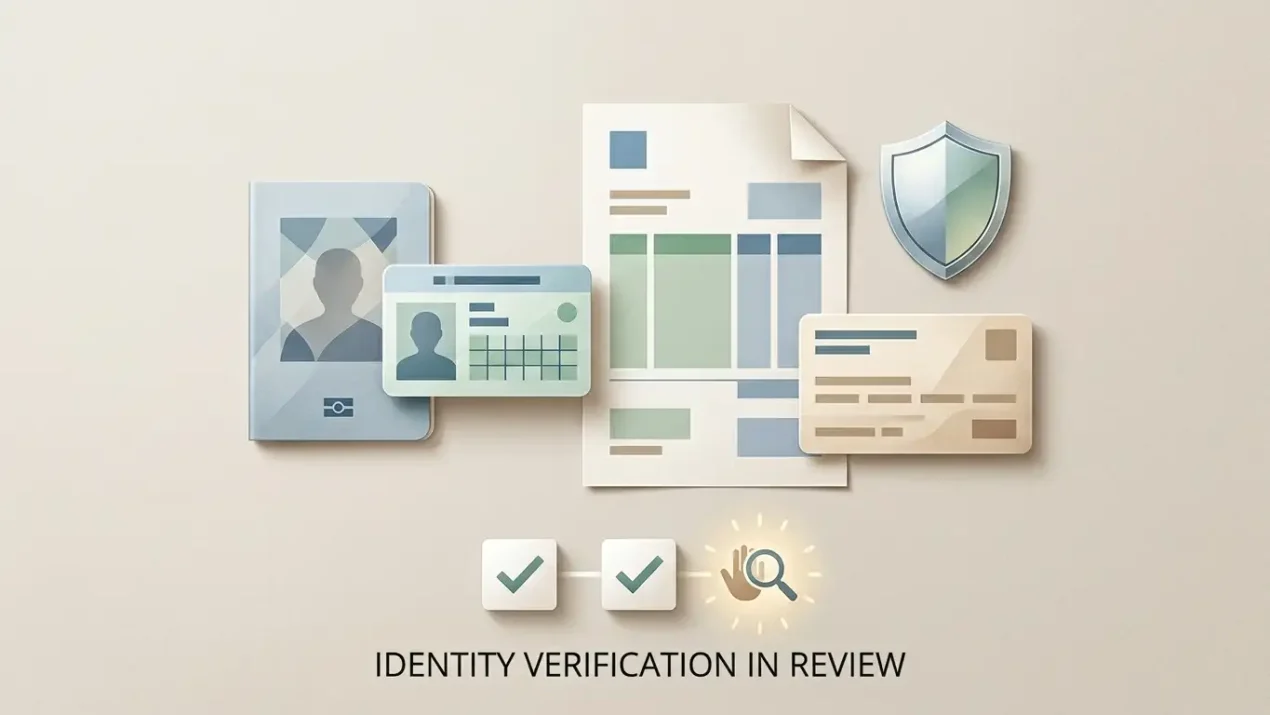
Content
NineCasino’s official KYC policy lists an actual passport or ID card and proof of permanent address, such as a utility bill or bank statement, with the address document no older than six months. It can also request additional identity or payment evidence. The policy says that after documents are uploaded, the KYC Team has 24 hours to review them and email an initial outcome: approved, rejected or more information needed.
That 24-hour figure is an initial document-review target, not a guarantee that every account will be fully verified within one day. The same policy uses a risk-based due-diligence model and allows further information to be requested. It also says withdrawal rights are limited while documents are in the temporary review stage and that unsuccessful KYC can prevent additional deposits or withdrawals.
What NineCasino KYC is for
The official policy says NineCasino follows Know Your Customer principles to prevent financial crime and money laundering through client identification and due diligence. The company reserves the right to ask for KYC documentation it considers necessary to determine the identity and location of a user.
The policy is risk-based rather than a promise of one identical check for everybody. It describes three due-diligence levels: simplified due diligence for extremely low-risk transactions that do not meet required thresholds, customer due diligence as the standard verification and identification process, and enhanced due diligence for high-risk customers, large transactions or special cases.
This structure explains why a document list should be read as a set of categories the operator can request, not as an exhaustive guarantee that no other evidence will ever be needed. NineCasino explicitly reserves the right to request additional documentation, and the policy includes “more information needed” as one possible outcome after an initial review.
Documents listed in the official KYC policy
The policy first describes a minimum identification data set. It includes full name, date of birth, permanent residence address and an identification number. These are data points used to identify the account holder rather than a complete list of files to upload.
For actual identification documents, NineCasino lists a current passport or ID card. For address verification, it lists a document confirming the client’s permanent residence address at the relevant time, giving a utility bill or bank statement as examples and requiring that proof of address be no older than six months.
The policy then lists additional identification material that can be requested. Examples include another national identity document such as a driving licence or military ID, a photo of the user with an open passport visible against the face, and a bank-card image with limited card information visible. Because these are examples within a risk-based process, they should not be turned into a statement that every user must submit every item.
| Purpose | Officially listed examples | What to check |
|---|---|---|
| Identity | Current passport or ID card | Name, age and identifying information should be readable and consistent with the account |
| Address | Utility bill or bank statement | Permanent address evidence should be no older than six months |
| Additional identity | Driving licence, military ID, user photo with passport | Requested only where additional evidence is needed |
| Payment evidence | Bank-card image with specified partial details visible | Follow the operator’s current upload instructions and protect data that is not requested |
Why documents can be rejected
NineCasino’s KYC policy gives several reasons that supplied documents might not be approved. These include a mismatch between the name or address on the documents and the account, illegible or damaged documents, evidence that does not confirm required information such as age or name, unreadable files, or a document type that is not accepted for the requested verification purpose.
This makes consistency a practical part of KYC. The information supplied during account setup should match the evidence later used to verify it. If an address has changed, the account and the proof submitted should reflect the current position rather than leaving a mismatch that needs to be resolved during review.
Image quality matters as well. A valid document can still fail to establish identity if key information is unreadable or the copy is damaged. The useful goal is not to send the largest possible bundle of documents in advance, but to provide the specific evidence requested in a legible form and respond if the KYC team asks for more.
What the 24-hour KYC statement actually means
The official policy says that once documents are uploaded, the user receives a “Temporarily Approved” status and the documents move to the operator’s side for review. It then states that the KYC Team has 24 hours to go over the documents and email the user about the outcome.
The outcomes listed are Approved, Rejected or More information needed. That third outcome is the reason the 24-hour figure should not be described as guaranteed full verification within 24 hours. A review can happen within that stated target while the overall process remains open because additional evidence is still required.
The policy also says NineCasino makes a final decision after analysing the documents. If KYC is unsuccessful, the reason is documented and a support ticket is created, with the ticket number and explanation communicated to the user. The sequence is therefore review, outcome and, where necessary, follow-up rather than a universal one-step countdown.
For planning a withdrawal, it is better to complete requested verification before treating the payout as time-critical. A withdrawal request can have its own processing period, while an unresolved identity check can independently restrict the account.
How KYC can affect withdrawals
The KYC policy is explicit about the connection between verification and cashouts. Users with the temporary approval status can normally use the platform, but their right to complete withdrawals is limited. If a user fails KYC successfully, the policy says that additional deposits or withdrawals of any amount cannot be made.
The policy also states that before any withdrawal, after a user has passed KYC, NineCasino performs a detailed algorithmic and manual check on activity and balance to determine whether the amount withdrawn results from proper activity on the platform. This means passing identity verification is important, but it is not described as the only check connected with a cashout.
Separately, NineCasino publishes a casino withdrawal-processing period of up to 72 hours before the additional payment-method transfer time. The dedicated withdrawal guide explains that payout timeline and the residence-dependent minimums. KYC and withdrawal processing should be treated as related but different stages: verification can block or delay the ability to complete a payout, while the payment request has its own processing sequence.
What not to infer from the KYC policy
First, the document examples are not a promise that NineCasino can request only those items. The policy reserves the right to ask for documentation it considers necessary and uses risk-based due diligence. A page that says “only passport and utility bill are ever needed” would therefore overstate the source.
Second, the 24-hour review statement is not a guaranteed end-to-end completion time. It covers the KYC Team’s review of uploaded documents and communication of an initial outcome. More information can still be requested, so a complex case can continue beyond that initial review.
Third, the policy does not support a “no-KYC withdrawal” claim. It says withdrawal rights can be restricted before identity is sufficiently established and describes checks before withdrawals. A review should not replace this with a simplified promise designed to make the service sound frictionless.
Finally, KYC is not evidence of a local UK licence. Identity verification and licensing are separate subjects. The trust and licence page covers the regulatory position and should be used for that decision rather than drawing licensing conclusions from the existence of KYC procedures.
How to prepare for verification without oversharing
- Keep the name, date of birth and permanent address on the account accurate.
- Use a current, readable passport or ID when that category is requested.
- Use recent address evidence that meets the policy’s six-month rule.
- Check that account details and supporting documents do not contradict one another.
- Provide additional identity or payment evidence only when it is requested through the operator’s verification process.
- Follow the current upload instructions rather than copying document requirements from an old review.
- Do not assume an initial review email means every later account or payout check is complete.
The purpose of this preparation is to reduce avoidable mismatches and unreadable evidence, not to bypass the operator’s checks. If the requested evidence changes, the current KYC interface or instruction from the verification team is the operational source to follow.
KYC questions answered
Which identity document does NineCasino list?
The official policy lists a current passport or ID card as actual identification evidence. Additional identification evidence can also be requested depending on the case.
How recent must proof of address be?
The policy says the address document, such as a utility bill or bank statement, should be no older than six months.
Does NineCasino guarantee verification within 24 hours?
No. The policy says the KYC Team has 24 hours to review uploaded documents and email an initial outcome. One possible outcome is that more information is needed, so the full process can continue after that review.
Can KYC affect a withdrawal?
Yes. The official policy says withdrawal rights are limited during the temporary review stage and that unsuccessful KYC can prevent additional deposits or withdrawals.
Bottom line
NineCasino’s KYC policy is unusually specific about the difference between document categories and review outcomes. It lists passport or ID evidence, proof of address no older than six months, and possible additional identity or payment evidence. It also sets a 24-hour target for the KYC Team to review uploaded documents and send an initial outcome.
The important qualification is precise rather than vague: 24 hours describes the initial review stage, not guaranteed final verification. More information can be requested, and withdrawal rights can remain restricted while identity is not sufficiently established. For a user deciding when to cash out, completing requested KYC early is more useful than assuming the payout clock starts independently of verification.
This material was created by the NineCasino UK Guide team.
NineCasino KYC and Verification — More on this topic at nine casino.
See also NineCasino Live Casino.
Related posts
NineCasino Reputation and Player Review Signals
NineCasino Withdrawals and Payout Times